

 Login / Register
  CATEGORIES
Introduction
Connecting timber beams to steel posts is one of the most common structural tasks in Australian residential construction. Whether you’re building a verandah, pergola, carport, deck, or supporting floor bearers, the connection between a timber beam and an SHS (Square Hollow Section) steel column needs to be strong, precise, and compliant with Australian Standards.
Getting this connection right is critical. A poorly executed timber-to-steel joint can lead to structural failure, costly rework, and safety hazards. In this comprehensive guide, we’ll walk you through the main methods Australian builders use to attach timber beams to steel posts — from traditional welded brackets to modern slide-on cleat systems — so you can choose the best approach for your next project.
Why Are Timber Beams Connected to Steel Posts?
In Australian construction, combining timber and steel is incredibly common. Steel posts (typically SHS columns) provide superior vertical strength and durability, while timber beams offer cost-effective spanning ability and ease of handling. You’ll find this combination used in:
- Verandah and patio roof beams – timber rafters and beams supported by galvanised SHS columns
- Pergola construction – hardwood beams bolted to steel posts for outdoor entertaining areas
- Deck and floor bearer support – timber floor bearers sitting on steel columns in sub-floor areas
- Carport structures – where steel posts support overhead timber or steel beams
- House raising and restumping – replacing old timber stumps with galvanised steel columns and reconnecting bearers
The challenge lies in making a secure, adjustable, and long-lasting connection between two fundamentally different materials. Let’s look at the methods available.
Method 1: Traditional Factory-Welded Brackets
The conventional approach involves having a steel fabricator weld angle brackets, cleats, or top plates directly onto the SHS column in a workshop. The assembled post-and-bracket unit is then delivered to site and concreted into pier footings.
Pros
- Strong, permanent connection when done by a qualified welder
- Familiar to most structural engineers and inspectors
Cons
- Heavy and cumbersome – welded assemblies up to 4 metres long are difficult to transport and handle on site
- No room for adjustment – if beam levels change on site due to ground conditions, the pre-welded bracket is in the wrong position
- Higher cost – factory welding, galvanising after welding, and transport of long assemblies all add expense
- Longer lead times – fabrication and delivery can delay your build schedule
Method 2: Site-Welded Connections
Some builders opt to weld brackets to SHS posts on site. This allows precise positioning but comes with its own set of challenges.
Pros
- Brackets can be positioned at the exact height needed
- No factory lead time for the bracket positioning
Cons
- Requires a qualified welder on site, which increases labour costs
- Site welding on galvanised steel produces toxic zinc fumes – a serious health hazard requiring proper ventilation and PPE
- Burns off the galvanised coating at the weld zone, leaving the steel vulnerable to corrosion unless re-treated
- Fire risk on construction sites, especially in bushfire-prone areas
Method 3: Bolt-Through Connections
Another approach is to drill through the SHS post and bolt the timber beam directly or via a bracket. This is simple in concept but has limitations.
Pros
- No welding required
- Adjustable if holes are slotted
Cons
- Drilling through SHS walls weakens the section at that point
- Requires precise measurement – holes drilled in the wrong position cannot be easily corrected
- Water can enter the hollow section through bolt holes, causing internal corrosion over time
Method 4: Slide-On SHS Cleats – The Modern Solution
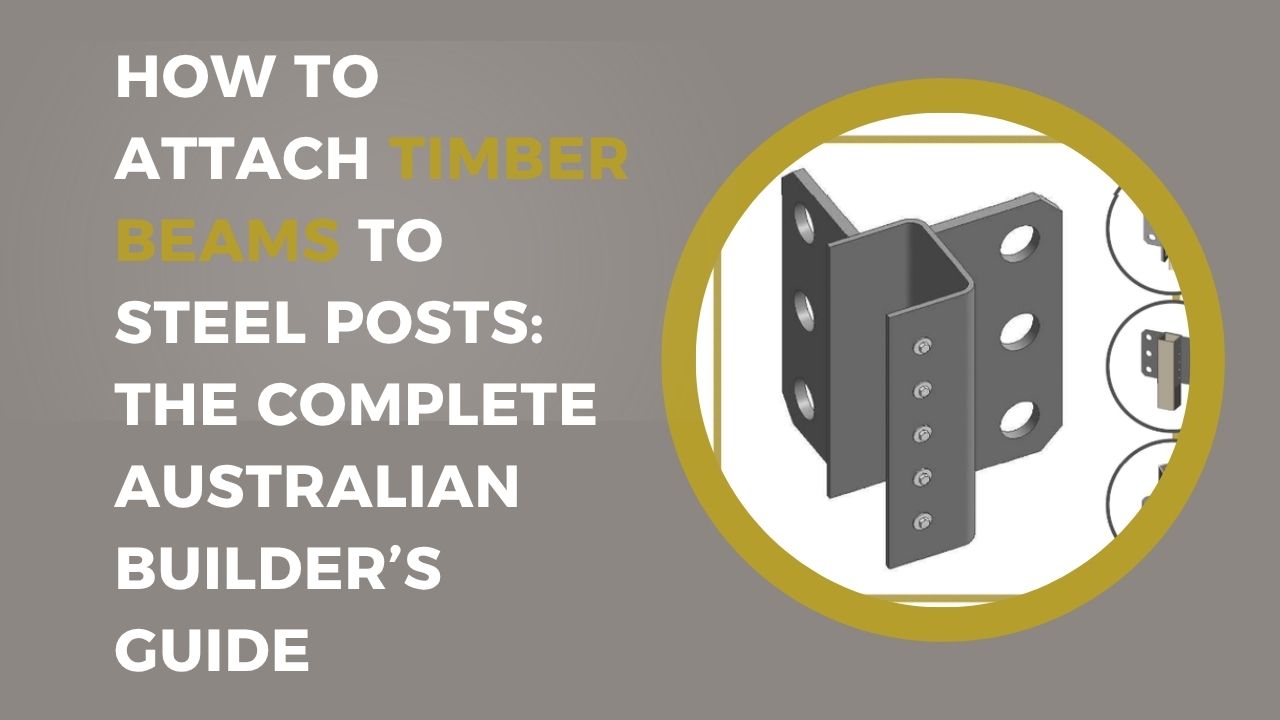
A newer, patented approach that’s rapidly gaining popularity among Australian builders is the use of purpose-designed SHS cleats. These are pre-fabricated galvanised steel channel cleats that slide directly onto the SHS column and can be positioned at any height before being permanently fastened.
How SHS Cleats Work
- Concrete your SHS posts into pier footings and ensure they are plumb and aligned.
- Slide the cleat onto the SHS column – the channel profile wraps around the post, allowing it to move freely up and down.
- Set a laser level and position the cleat at the exact beam height required.
- Fasten the cleat to the post using tek screws, bolts, welds, or a combination – depending on the load requirements.
- Bolt your timber beam to the cleat and tighten.
- Paint for aesthetics if desired – monument colour is a popular choice.
Why Builders Are Switching to SHS Cleats
- Fully adjustable on site – no more cutting, grinding, or reworking if levels change
- No factory welding needed – posts and cleats ship separately, reducing transport costs
- Hot-dip galvanised – corrosion-resistant and suitable for coastal and outdoor environments
- Multiple configurations – single side, corner, 2-way inline, 3-way intermediate, and more
- Significant time savings – builders report saving up to 6 hours per connection point compared to traditional methods
- Engineering certified – designed by qualified Australian structural engineers and available with design certifications
Which Method Is Right for Your Project?
The best connection method depends on your project’s requirements, budget, and timeline. For most residential verandah, pergola, deck, and carport projects in Australia, slide-on SHS cleats offer the best combination of speed, precision, strength, and cost-effectiveness.
If you’re working on a project that requires flexibility and on-site adjustment, which covers the majority of residential builds, SHS cleats are the smartest choice.
Key Tips for a Strong Timber-to-Steel Connection
- Always use galvanised fasteners – mixing galvanised steel with non-galvanised bolts causes galvanic corrosion.
- Specify beam dimensions when ordering cleats – cleat size must match your timber beam depth and width (e.g., 190×42 LVL15).
- Use a laser level – for consistent beam heights across multiple posts.
- Consider load requirements – for loads under 50kN, tek screws may suffice; above that, add stitch welds for extra security.
- Get an engineering certification – for council approval, ensure your connection method is backed by a structural engineer’s certification.
Conclusion
Attaching timber beams to steel posts doesn’t have to be complicated, expensive, or time-consuming. While traditional welded and bolted methods have served the industry for decades, modern SHS cleat systems offer Australian builders a faster, more flexible, and more precise alternative.
Whether you’re building a backyard verandah or managing a large-scale residential project, the right timber-to-steel connection can save you hours of labour, reduce material waste, and deliver a cleaner, more professional result.
